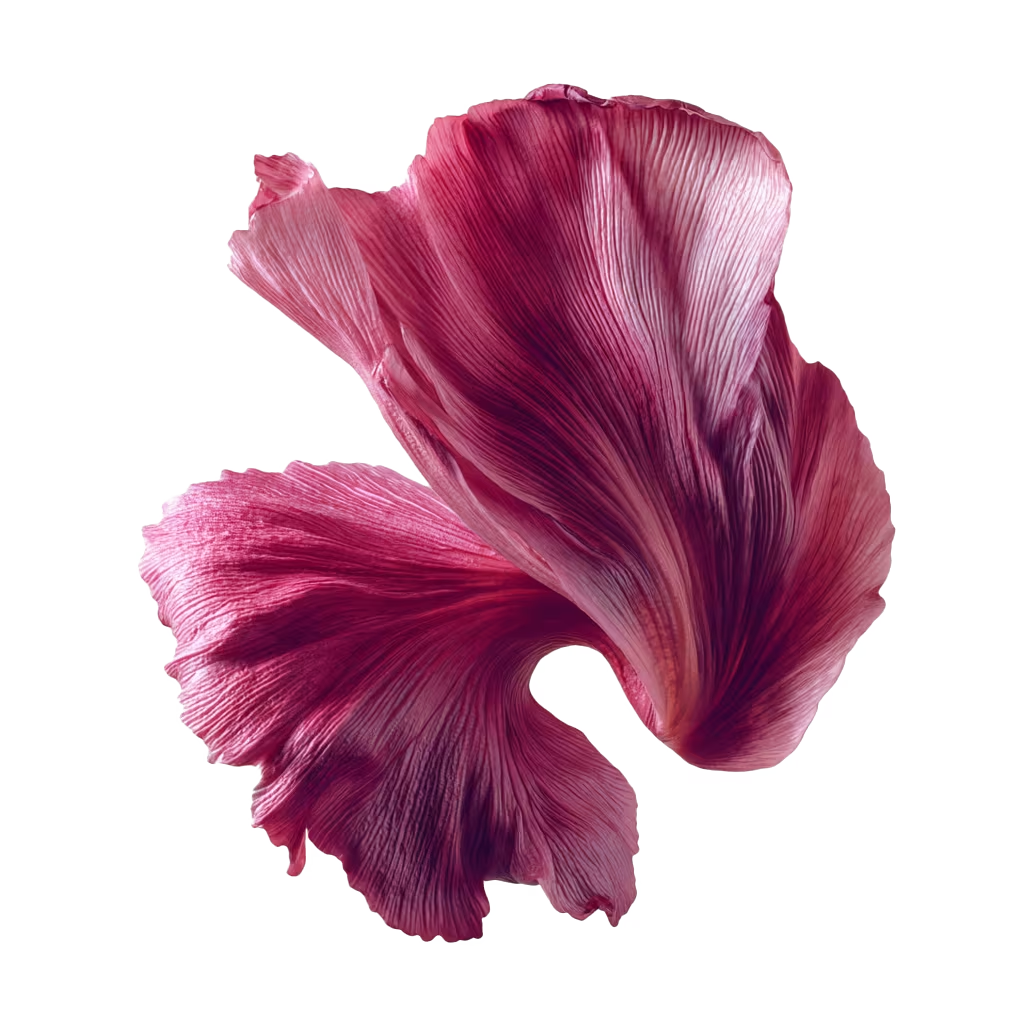
floral
Egyptian Violet
Egyptian violet, also known as Egyptian blue or cuprorivaite, is associated primarily with its vibrant visual characteristics rather than a scent, as it's actually a synthetic pigment. Developed in ancient Egypt around 2200 BCE, it's one of the first artificial pigments known in history. The color resembles a rich, intense blue that borders on purple, thus occasionally being referred to as "Egyptian violet."
This pigment was originally crafted by heating a mixture of sand, copper, and natron, resulting in a crystalline blue compound that was ground to make a fine powder used in art and decoration. Despite the name suggesting a floral similarity, Egyptian violet does not possess a notable scent profile, as it is a color and not an essence or extract that emits aroma. Its significance lies in its use in coloring ceramics, statues, and later, in the paintings of the Renaissance and beyond, serving as a testament to the technological and artistic achievements of ancient cultures rather than contributing any olfactory elements.
Like this smell?
Discover your fragrance match by taking our quiz and exploring scents tailored to your taste.